
Compact defibrillators

Protection you can carry: the closest thing to a pocket defibrillator

No AED truly fits a pocket. Two of ours fit a glovebox, a kit bag or a desk drawer.

Explore our Defibrillators
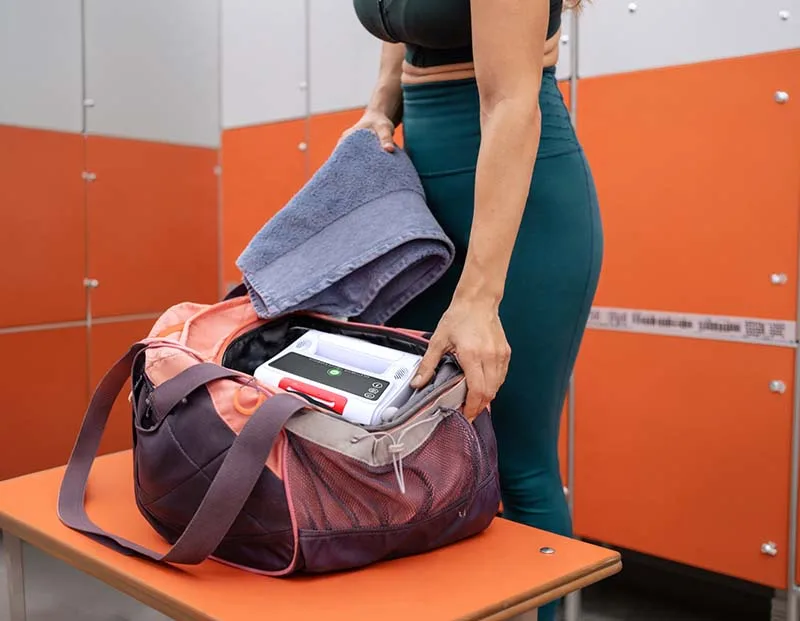
The HeartHero Elliot defibrillator sitting inside an open gym bag, showing how little space the 680 g unit takes up.
The HeartHero Elliot, 680 g, shown in a standard gym bag.

Most people searching for a pocket defibrillator have already spotted the problem with a wall-mounted unit. The defibrillator is inside the building and the emergency is in the car park, out on site, or two streets away in a work van. Integrity HS is Indigenous-owned and was founded by intensive care paramedics, and we field this question most weeks, so here is the straight answer.

Is there such a thing as a pocket defibrillator?

No defibrillator sold in Australia fits in a pocket. The smallest unit Integrity HS stocks is the HeartHero Elliot at 680 g and 16 x 15.5 x 4.3 cm, which fits a glovebox, a kit bag or a desk drawer. The HeartSine Samaritan 360P is the next size up at 1.1 kg.

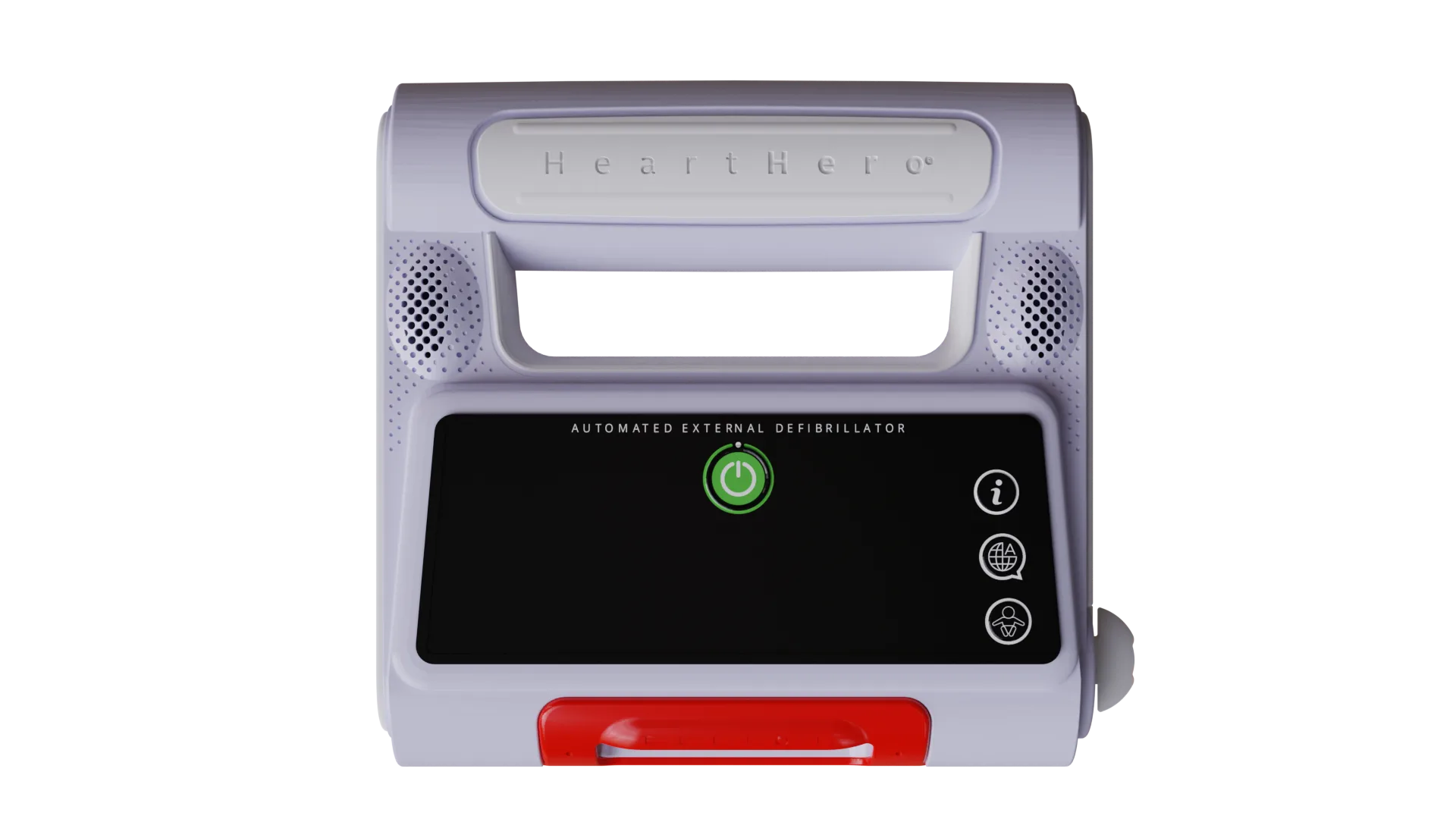
HeartHero Elliot fully automatic defibrillator with its red pull tab on the front of the unit.

HeartHero Elliot Fully Automatic Defibrillator

The smallest and lightest we stock

Elliot suits the buyer who wants the defibrillator with them, not near them. Trades in utes and vans, trainers moving between sites, boat and caravan owners, and households that want one unit that travels.

  • Light enough to carry every day680 g with battery and pads fitted, 16 x 15.5 x 4.3 cm. It goes in the bag you already carry.
  • Keeps working where gear usually failsIP66 rated, so dust cannot get in and jets of water will not stop it. Works from minus 20°C to 50°C.
  • One pull starts the rescuePulling the red tab turns it on and releases the pads together. No lid to work out, no menu to read.
  • Adults and children on one button150 joules for an adult, 50 joules for a child, from the same pads. No second pad set to buy.
  • Readiness you can check from your phoneThe app reports battery status, pad condition and self-test results over Bluetooth. Six-year warranty.
$1,395 Free shipping. View the HeartHero Elliot
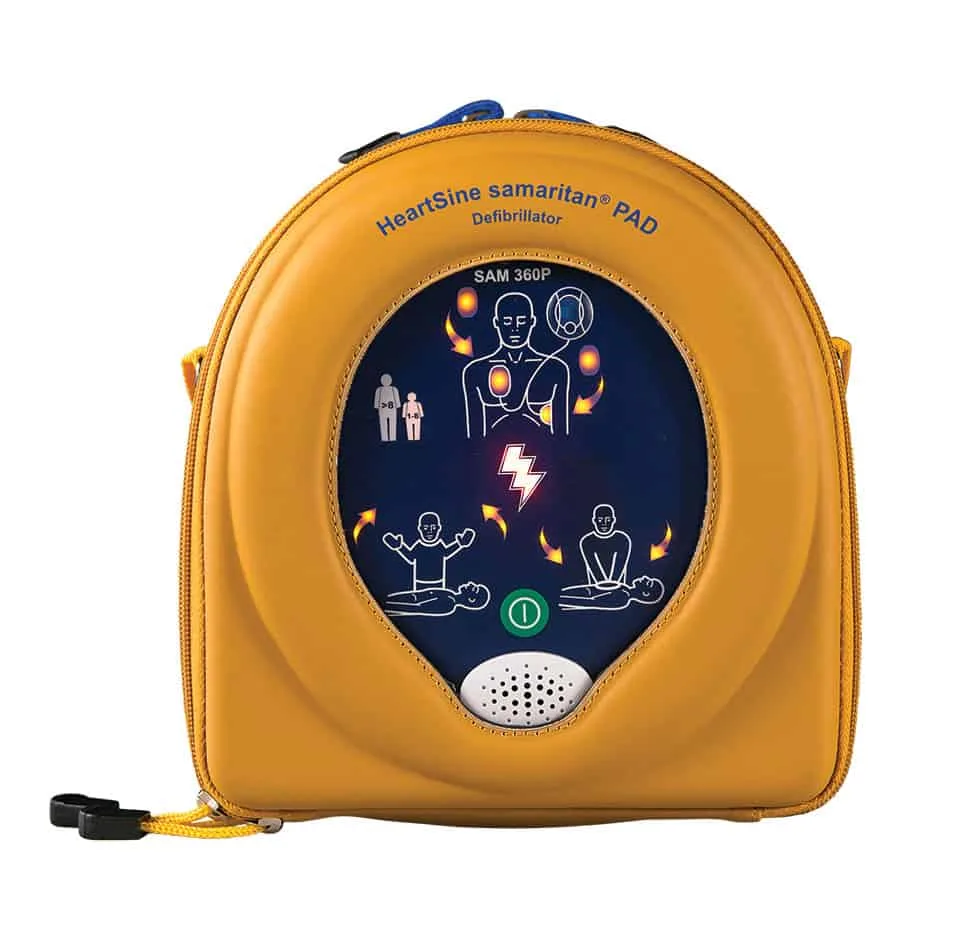
HeartSine Samaritan 360P fully automatic defibrillator in its carry case with the Pad-Pak cartridge fitted.

HeartSine Samaritan 360P Fully Automatic Defibrillator

The compact, long-established alternative

The 360P suits shared spaces where nobody really owns the maintenance. Reception areas, clubrooms, school offices and small workshops, where the unit stays put and any one of several people might grab it.

  • One part to replace, one date to watchThe Pad-Pak cartridge holds the battery and pads together, so there is one expiry date to track and one item to swap after use.
  • Small enough to move when you need to1.1 kg and 20 x 18.4 x 4.8 cm with the Pad-Pak in. It sits under a counter or in a kit bag, no wall bracket needed.
  • Nobody has to press shockIt reads the heart rhythm and delivers the shock itself, which takes the hardest decision away from whoever is standing there.
  • Coaching built into the unitVoice prompts walk the rescuer through each step and a metronome sets the compression rhythm, so a bystander is told what to do and how fast.
  • Eight years of coverAn eight-year manufacturer warranty, and an IP56 rating, which means protection from dust and from sprayed water.
$1,575 Down from $1,995. Free shipping. View the HeartSine 360P

How small each pocket defibrillator option actually is

Weight and size lead, because that is what this search is really about. Neither unit wins outright. They are built for different places.

Figures from the Integrity HS product pages and the manufacturer manuals.
Attribute HeartHero Elliot HeartSine Samaritan 360P
Weight, ready to use 680 g, including battery and pads 1.1 kg (1,100 g), including the Pad-Pak
Dimensions 16 x 15.5 x 4.3 cm 20 x 18.4 x 4.8 cm
Dust and water protection IP66, sealed against dust and jets of water IP56, dust and sprayed water
Operating temperature Minus 20°C to 50°C 0°C to 50°C
Operation Fully automatic, pull the red tab to start Fully automatic, one on and off button
Children Child mode button, same pads, 50 joules Paediatric-Pak accessory, 50 joules, ages 1 to 8
Consumables to track Pads and four CR123 batteries, checked in the app One Pad-Pak cartridge, one expiry date
Manufacturer warranty and price Six years, $1,395 Eight years, $1,575

Where a compact defibrillator actually goes

Placement decides which unit is right far more than the spec sheet does. Three situations cover most of the calls we take.

The ute, van or work vehicle

A parked cab in an Australian summer gets brutally hot, and a tray or tool box adds dust and vibration. That combination rules most units out.

Choose the Elliot. Minus 20°C to 50°C and an IP66 seal are what let it live in the vehicle.

The kit bag someone carries

Coaches, trainers, boat owners and remote crews carry their kit by hand, and every extra 100 g gets noticed. Gear that feels heavy gets left behind.

Choose the Elliot. At 680 g it is the lightest unit we stock, so it stays in the bag.

The reception counter or clubroom cupboard

Here the unit stays put, several people share responsibility, and the risk is not the weather. It is an expiry date nobody checked for two years.

Choose the HeartSine 360P. One Pad-Pak means one expiry date and one part to reorder, which is far easier to stay on top of.

Weighing up the wider range? Our portable defibrillator page covers carry options across every model, and the smallest AED in Australia page looks at size on its own.

Why buy from Integrity HS

A defibrillator is not something to buy from a catalogue and never hear about again. Here is what comes with it.

Advice from people who have used these devices

Liam Harte and Brad Goodwin founded Integrity HS as intensive care paramedics who served with the Australian Defence Force. Ring to ask which unit suits a work van and that is who you get.

A supplier your procurement team can sign off

Supply Nation certified, appointed to the South Australian Whole of Government Defibrillator Panel, and a member of the Australian Sudden Cardiac Arrest Alliance. Buying here counts towards supplier diversity targets.

Support that carries on after the invoice

Selection advice before you commit, a free audit of any defibrillators, batteries and pads you already hold, familiarisation training online or in person, then ongoing service and support.

Based in Redfern, shipping Australia wide

Orders leave from the NSWICC Business Hub in Redfern, NSW, and shipping is free on both units here. One site or forty, the process is the same.

Trusted by

  • Qantas
  • Westpac
  • Australian Taxation Office
  • Commonwealth Bank
  • Lendlease
  • ANZ

Questions we get asked before people buy

Is there such a thing as a pocket defibrillator?

No. No defibrillator sold in Australia fits in a pocket, and any listing that says otherwise is stretching the truth. The smallest unit available here is the HeartHero Elliot at 680 g and 16 x 15.5 x 4.3 cm, which is glovebox, kit bag and drawer sized. That is the closest real answer to a pocket defibrillator.

What is the smallest and lightest defibrillator available in Australia?

The HeartHero Elliot is the smallest and lightest unit Integrity HS stocks, at 680 g with battery and pads fitted, measuring 16 x 15.5 x 4.3 cm. The HeartSine Samaritan 360P is the next size up at 1.1 kg and 20 x 18.4 x 4.8 cm. Both are fully automatic, so neither needs a trained operator.

How much does a pocket defibrillator cost?

Compact fully automatic units start at $1,395 for the HeartHero Elliot and $1,575 for the HeartSine Samaritan 360P, both with free shipping. A pocket defibrillator search usually lands in that band. Bulk pricing applies when you fit out several sites, so call 1300 720 024 for a quote.

Can you keep a defibrillator in a car, a kit bag or a caravan?

Yes, and the things to check are heat, cold, dust and damp rather than the law. The HeartHero Elliot works from minus 20°C to 50°C and is rated IP66, which suits a ute, a boat or a caravan in the sun. The HeartSine Samaritan 360P works from 0°C to 50°C and is rated IP56, better suited to a kit bag or an indoor cupboard.

Do you need training to use a defibrillator?

No licence is needed in Australia, and both units here are fully automatic. They talk the rescuer through each step and deliver the shock themselves, with no button to press. Manufacturers still recommend basic life support training, and Integrity HS runs familiarisation training online or in person, so the first time someone opens the unit is not during an emergency.

Not sure which one suits your setup?

Tell us where the unit needs to live and who might have to use it, and we will tell you which of the two fits. No cost, and you will be talking to a paramedic.