
Defibrillators for children

Paediatric defibrillator cover without buying a second unit

Every unit we stock treats children. What changes is whether you press a button or fit different pads.

Explore our Defibrillators
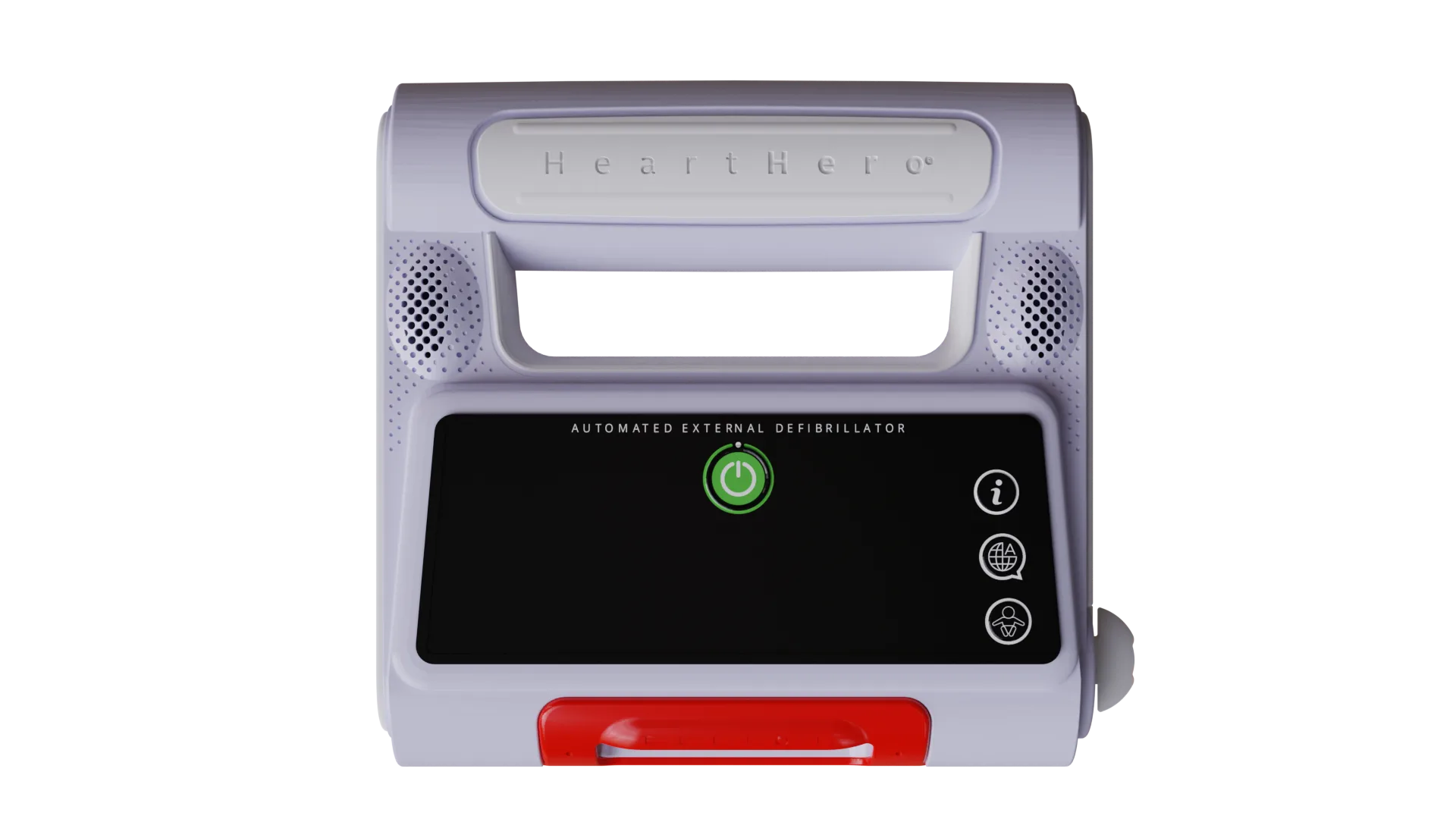
HeartHero Elliot fully automatic defibrillator with its red pull tab on the front of the unit.
The HeartHero Elliot, 680 g, with a child mode button and one set of pads for every age.

Teachers, coaches and childcare managers all ask the same thing: if a child collapses, is the unit on the wall safe to use on them? Behind most searches for a paediatric defibrillator sits a worry about buying the wrong model, or having to buy two. Integrity HS is Indigenous-owned and was founded by intensive care paramedics, and the honest answer is short. Every defibrillator we stock is built for adults and children. What differs between models is how you switch over, and whether that means a button or a second set of pads.

Is there such a thing as a paediatric defibrillator?

No, there is no separate paediatric defibrillator. Every unit Integrity HS stocks treats children as well as adults. The HeartHero Elliot and the LIFEPAK CR2 both switch with a child mode button and keep the same pads, for a child aged 1 to 8 or under 25 kg. Other models take dedicated paediatric pads instead.

HeartHero Elliot fully automatic defibrillator, the lightest unit Integrity HS stocks.

HeartHero Elliot Fully Automatic Defibrillator

One button for a child, one set of pads

Elliot suits families, swim schools and junior sports clubs, where the children are not all in one building and the unit travels with the group. It is light enough to sit in a coach's bag for a whole season without anyone resenting it.

  • One set of pads covers every age150 joules for an adult, 50 joules for a child, from the same pads. There is no second paediatric set to buy, store or watch for expiry.
  • Light enough to follow the children680 g with battery and pads fitted, 16 x 15.5 x 4.3 cm. It goes to the pool, the oval or the camp in a bag someone is already carrying.
  • Built for wet, dusty placesRated IP66, which means dust cannot get in and jets of water will not stop it. It keeps working from minus 20°C to 50°C.
  • One pull starts the rescuePulling the red tab turns it on and releases the pads together. It then delivers the shock itself, and a metronome sets the compression rhythm.
  • Readiness you can check from a phoneThe Elliot app reports battery status, pad condition and self-test results, so nobody has to remember a walk-round. Six-year warranty.
$1,395 Free shipping. View the HeartHero Elliot
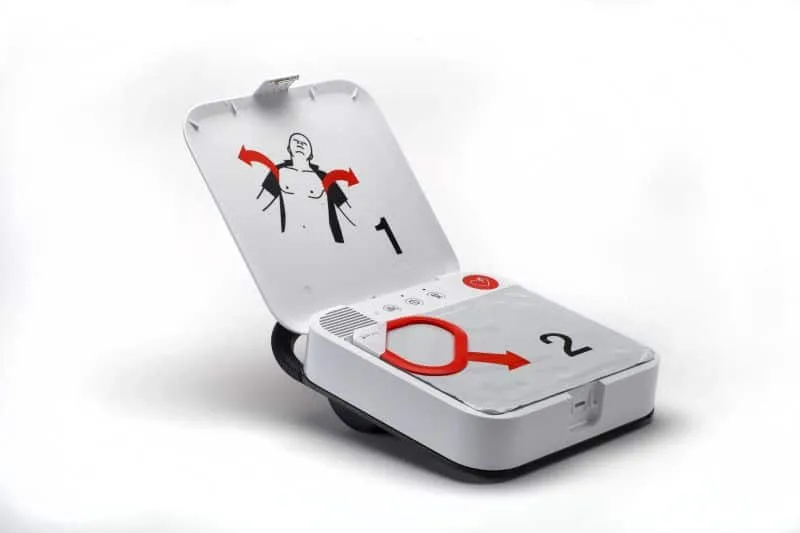
LIFEPAK CR2 fully automatic defibrillator with the lid open and the electrodes visible.

LIFEPAK CR2 Fully Automatic Essential Non WIFI

Child mode plus coaching through the rescue

The CR2 suits a school, childcare centre or club that mounts one unit in a cabinet and expects several adults to share responsibility for it. It is built so the person who reaches it first can manage a rescue without recent training.

  • Child mode without changing padsA button on the unit delivers a lower energy shock for a child aged 1 to 8 or under 25 kg. The electrodes already on the chest stay where they are.
  • Compressions never have to stopcprINSIGHT reads the heart rhythm while chest compressions carry on, so nobody stands back waiting for the unit to make up its mind.
  • Heard over a noisy roomClearVoice detects the background noise and lifts its own volume, which counts in a school hall, a playground or a poolside full of people.
  • Pads anyone on staff can replaceQUIK-STEP electrodes peel off the base of the unit, so a new set goes on in moments. One set at $178 covers adults and children.
  • Eight years of coverAn eight-year manufacturer warranty, and an IP55 rating, which means protection from dust and from water sprayed at the case.
$2,295 Down from $2,995. Free shipping. View the LIFEPAK CR2

Two paediatric defibrillator options, side by side

How each one treats a child comes first, because that is what this search is about. Neither unit wins outright. They are built for different places.

Figures from the Integrity HS product pages, with the Elliot shock energies from the manufacturer manual.
Attribute HeartHero Elliot LIFEPAK CR2 Essential
Switching to a child Dedicated child mode button, pads stay on Child mode button on the unit, pads stay on
Shock energy 150 joules adult, 50 joules child Lower energy in child mode, ages 1 to 8 or under 25 kg
Pads to keep in stock One cartridge, $199, five-year pad life One set, $178, four-year shelf life
Weight and size 680 g, 16 x 15.5 x 4.3 cm 2 kg, 22.6 x 22.6 x 9.7 cm
CPR guidance Audio metronome for compression rhythm cprINSIGHT analysis during compressions, ClearVoice volume
Dust and water protection IP66, sealed against dust and jets of water IP55, dust and sprayed water
Operation Fully automatic, pull the red tab to start Fully automatic, semi automatic on request
Warranty and price Six years, $1,395 Eight years, $2,295

Where a unit for children usually lives

Where it sits, and who is likely to reach it first, decides the choice more than the specification does.

The childcare centre or primary school

One unit, a cabinet in the front office, and a roster of staff who each did a first aid course at some point. Nobody there wants to be reading a label under pressure.

Choose the LIFEPAK CR2. Child mode is a button, and cprINSIGHT lets compressions carry on while it analyses.

The swim school, club or sports field

The children are not in one building. Sessions move between pools, ovals and away games, and the kit lives in a car boot in between.

Choose the Elliot. At 680 g and rated IP66, it travels in the coach's bag and copes with a wet poolside.

The family home with a diagnosed child

A household told to keep a defibrillator ready does not need a fleet dashboard. It needs one unit any adult in the house can use, grandparents included.

Choose the Elliot. One pull of the red tab starts it, and the app confirms the battery and pads are still good.

Working out which pads a particular unit takes? Our adult vs paediatric defibrillator pads page compares the two dedicated child electrode sets we stock. If you are still choosing a model, the AEDs page covers the full range and the portable defibrillator page looks at the units that travel.

Why buy from Integrity HS

Buying a defibrillator for a place with children in it is a decision you want to get right once. Here is what comes with it.

Advice from people who have used these devices

Liam Harte and Brad Goodwin founded Integrity HS as intensive care paramedics who served with the Australian Defence Force. Ring to ask whether a child mode button is enough for your site and that is who you get.

A supplier your procurement team can sign off

Supply Nation certified, appointed to the South Australian Whole of Government Defibrillator Panel, and a member of the Australian Sudden Cardiac Arrest Alliance. Buying here counts towards supplier diversity targets.

Support that carries on after the invoice

Selection advice before you commit, a free audit of any defibrillators, batteries and pads you already hold, familiarisation training online or in person, then ongoing service and support.

Based in Redfern, shipping Australia wide

Orders leave from the NSWICC Business Hub in Redfern, NSW, and shipping is free on both units here. One site or forty, the process is the same.

Trusted by

  • Qantas
  • Westpac
  • Australian Taxation Office
  • Commonwealth Bank
  • Lendlease
  • ANZ

Questions parents and site managers ask first

Is there a special paediatric defibrillator for children?

No. There is no separate paediatric defibrillator sold in Australia. Every unit Integrity HS stocks is made for adults and children. Some models, including the HeartHero Elliot and the LIFEPAK CR2, switch to a child setting with a button and keep the same pads. Others, such as the HeartSine Samaritan and the ZOLL AED Plus, take a dedicated paediatric pad set instead.

At what age or weight does a child need the child setting?

The usual guide is a child aged 1 to 8 years, or weighing under 25 kg. That is the threshold stated on the LIFEPAK CR2 product page and on the HeartSine Paediatric-Pak. Above it, the adult setting applies. If nobody knows the child's age in the moment, turn the unit on and follow its voice prompts, which step the rescuer through what to do.

Do I need to buy separate pads for children?

It depends on the unit. The HeartHero Elliot and the LIFEPAK CR2 use one set of pads for every age, so there is nothing extra to buy or store. The ZOLL AED 3 and the Mindray C1A also use universal adult and paediatric pads. A HeartSine Samaritan needs a Paediatric-Pak at $299, and a ZOLL AED Plus needs Pedi-padz II at $113.

Will one unit cover both adults and children at our site?

Yes. Every model in the range treats both, so one unit at a school, childcare centre or club is enough. The condition is that it either has a child mode button or you keep the matching paediatric pads beside it. The Elliot and the CR2 need nothing extra, which is why they suit sites where reordering falls to whoever has time that week.

How much does a defibrillator for a school or childcare centre cost?

The HeartHero Elliot is $1,395 and the LIFEPAK CR2 Essential is $2,295, down from $2,995, both with free shipping. Consumables are the other cost to plan for: an Elliot pad cartridge is $199 with a five-year pad life, and a CR2 pad set is $178 with a four-year shelf life. Call 1300 720 024 for quantity pricing.

What clients say about buying from Integrity HS

In line with our commitments towards Indigenous enterprise engagement we selected Integrity Health & Safety (via Supply Nation) to supply defibrillators as a result of their professional advice and support, fast and efficient service, and highly competitive pricing.

National Procurement ManagerConfirmed AED purchaser

For nearly 2 years now you and your staff have delivered exceptional service and all staff have walked away enjoying your training sessions. I look forward to working with you in the future.

Human Resources ManagerAudi

Not sure which one suits your site?

Tell us who is likely to reach the unit first, and whether children are there every day or now and then, and we will tell you which of the two fits. No cost, and you will be talking to a paramedic.