
Defibrillator waveforms

Biphasic vs monophasic defibrillator: what the difference means when you buy

Every AED on the market today is biphasic. What still differs between units is energy, upkeep and price.

Explore our Defibrillators
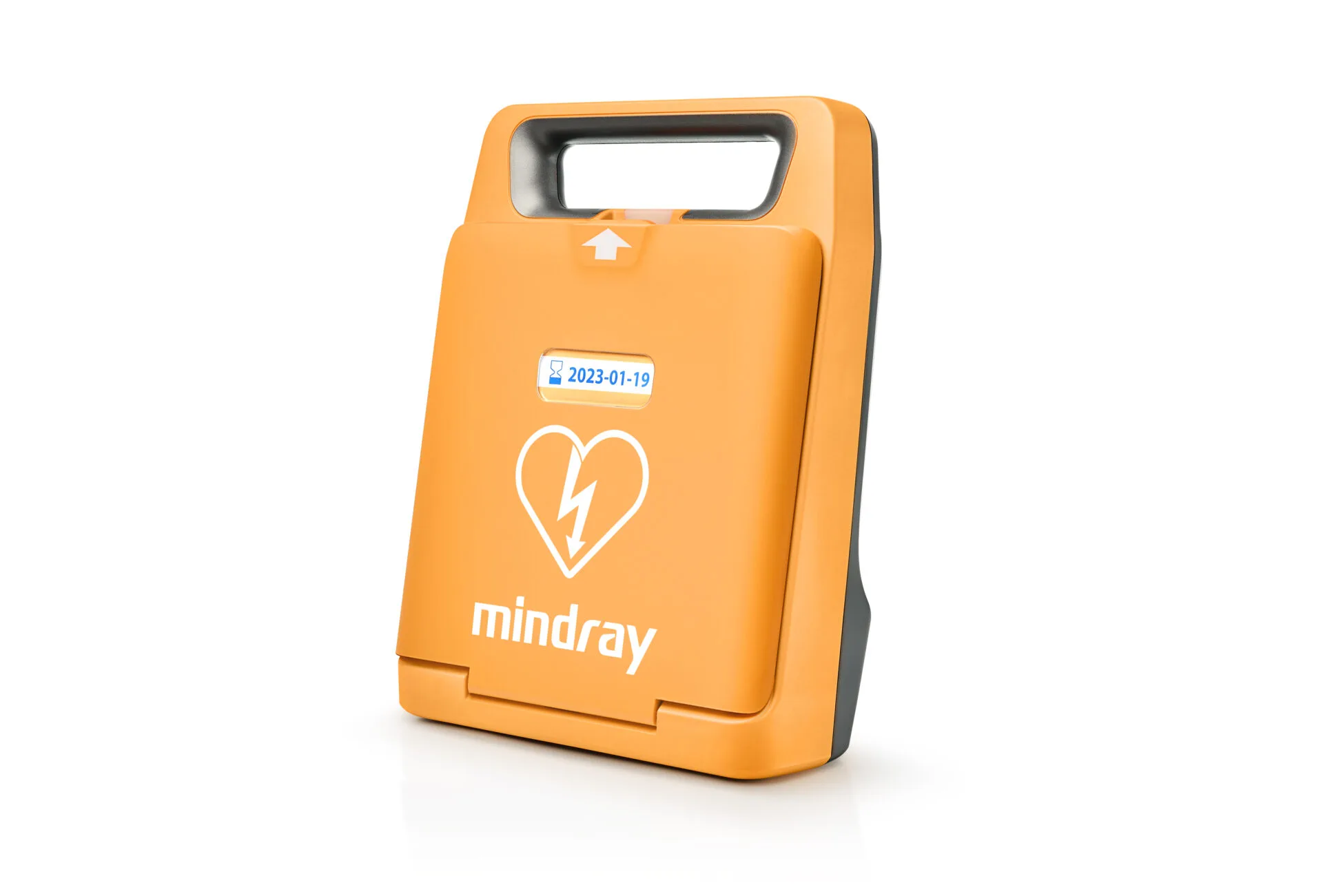
Mindray BeneHeart C1A fully automatic defibrillator with its pads and carry handle
The Mindray C1A, 2.3 kg, with adult shocks set anywhere from 200 to 360 joules.

The biphasic vs monophasic defibrillator question usually arrives one of two ways. Either a procurement form asks you to state the waveform, or someone has looked at an old unit in a cupboard and wondered whether the new one needs to be different. It sounds like a technical decision that could cost you if you get it wrong. It is not, and the reason is worth two minutes of your time. Integrity HS is Indigenous-owned and was founded by intensive care paramedics, so here is the answer we give on the phone.

What is the difference between a biphasic and a monophasic defibrillator?

A monophasic shock pushes current through the chest in one direction only. A biphasic shock sends it one way, then reverses it for the second half. Every automated external defibrillator on the market today uses a biphasic waveform, so the real choice is about energy, upkeep and who will be holding the unit.

Mindray BeneHeart C1A defibrillator, front view with the status indicator visible

Mindray C1A Non Connected Defibrillator

Energy that steps up, and five years between consumable changes

The C1A suits a site that will own the unit quietly for years: a workshop, a council depot, a farm shed, a small office. There is no subscription and no dashboard to log into, because the checking is done by hand and by the unit itself.

  • The shock gets stronger if the first one does not workAdult energy is configurable from 200 joules to 360 joules, and the unit automatically increases the energy for a later shock if it is needed.
  • The first shock lands in under eight secondsQShock analyses the heart rhythm and delivers the first shock in under 8 seconds, which is the part of a rescue nobody gets back.
  • Five years between pad and battery changesBoth the battery and the pads carry a five-year life, and the unit runs its own self-tests daily, weekly and monthly.
  • Coaching pitched at whoever picks it upResQNavi gives real-time voice and visual guidance that adjusts to the rescuer's pace and experience, so a first timer is not left guessing.
  • Rated for outside as well as inIP55 means dust protected and safe from water sprayed at it from any direction. Eight-year manufacturer warranty, and a child mode button for 35 to 90 joules.
$1,890 Down from $1,995. View the Mindray C1A
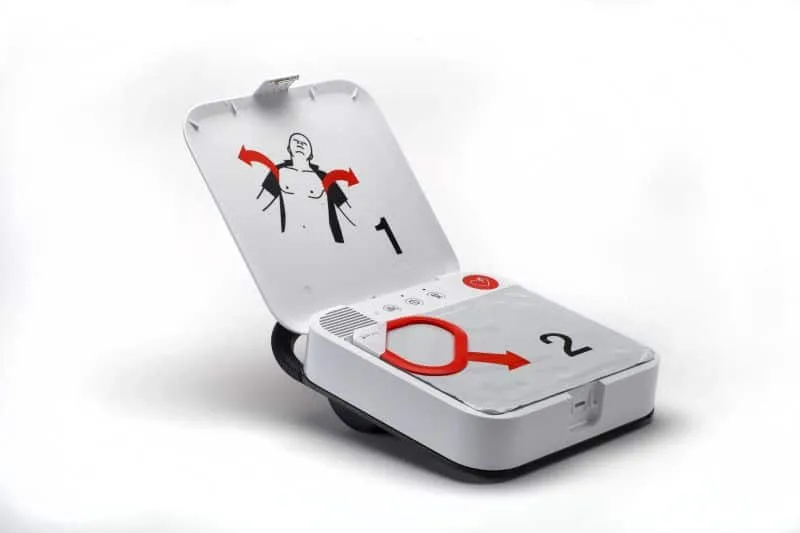
LIFEPAK CR2 fully automatic defibrillator with the lid open and the pads in place

LIFEPAK CR2 Fully Automatic Essential Non WIFI

The unit whose brochure names its waveform in writing

The CR2 Essential suits a workplace with a safety officer, a written procedure and an auditor who asks questions. It is the unit on this page with a published waveform and a published energy sequence, which makes the paperwork straightforward.

  • You can point at the waveform on paperThe LIFEPAK CR2 brochure states a biphasic truncated exponential waveform that adjusts for the patient's chest resistance, which answers a procurement form without a phone call.
  • A published energy sequence, from 150 to 360 joulesThe same brochure lists shocks configurable from 150 joules to 360 joules, with a default escalation of 200, then 300, then 360 joules for an adult.
  • Compressions do not have to stop for the analysiscprINSIGHT reads the heart rhythm while CPR continues, so the rescuer is not told to stand back and wait mid-rescue.
  • Heard over a loud roomClearVoice detects background noise and lifts the volume to match it, which matters on a factory floor, a platform or a busy venue.
  • Pads that peel off in one step, and a child buttonQUIK-STEP electrodes lift straight off the base for a fast change, and a button on the unit gives a child aged 1 to 8, or under 25 kg, a lower energy shock with no pad swap.
$2,295 Down from $2,995. Free shipping. View the LIFEPAK CR2

Biphasic vs monophasic defibrillator: what these two units actually deliver

Waveform and energy lead, because that is what this search is about. Neither unit wins outright. One publishes more of its detail, the other asks less of you between rescues.

Figures from the Integrity HS product pages and the LIFEPAK CR2 Essential manufacturer brochure.
Attribute Mindray C1A Non Connected LIFEPAK CR2 Essential
Waveform named by the manufacturer Not named in the C1A datasheet we hold Biphasic truncated exponential, stated in the brochure
Adult shock energy 200 to 360 joules, configurable 150 to 360 joules, configurable
Repeat shocks Energy increases automatically for a later shock if needed Default escalation of 200, then 300, then 360 joules
CPR support ResQNavi voice and visual guidance, adjusted to the rescuer cprINSIGHT analyses during compressions, ClearVoice lifts volume in noise
Children Child mode button, 35 to 90 joules, universal pads Child mode button, ages 1 to 8 or under 25 kg, no pad change
Weight and size 2.3 kg, 28.6 x 21 x 7.8 cm 2 kg, 22.6 x 22.6 x 9.7 cm
Battery and pads Five-year battery $395, five-year universal pads $120 Four-year battery $325.82, four-year pads $178
Manufacturer warranty and price Eight years, $1,890 Eight years, $2,295

Where each of these units earns its keep

Since the biphasic vs monophasic defibrillator question is settled, placement and upkeep decide it. Three situations cover most of the calls we take.

The depot, shed or workshop nobody inspects weekly

The unit goes on the wall and then it is out of mind. Six months later someone notices the pads expired, or the battery was flat the whole time.

Choose the Mindray C1A. Five years on both the battery and the pads means fewer reorder dates to miss, and the unit self-tests daily, weekly and monthly.

The loud site with a written first aid procedure

Machinery is running, a crowd has gathered, and your safety officer has to be able to show an auditor exactly what the device does and at what energy.

Choose the LIFEPAK CR2. ClearVoice raises the volume over the noise, cprINSIGHT keeps compressions going through the analysis, and the brochure states the waveform and the energy sequence in print.

Fitting out several sites at once

Ten units across ten locations means ten sets of consumables, ten expiry dates and a budget that has to stretch. Whatever you buy, you will buy a lot of it.

Choose the Mindray C1A. Quantity discounts apply, the MR62 pads are universal for adults and children, so one spare part suits the whole fleet.

The question that really does change how a unit behaves is who presses the shock button, covered on our fully automatic vs semi automatic defibrillator page. If the unit has to travel rather than hang on a wall, start with our portable defibrillator page instead. Our defibrillation page explains in plain words what that shock is doing in the first place.

Why buy from Integrity HS

Nobody should have to decode a spec sheet alone before spending two thousand dollars on a device they hope never to use. Here is what comes with it.

Advice from people who have used these devices

Liam Harte and Brad Goodwin founded Integrity HS as intensive care paramedics who served with the Australian Defence Force. Ring with a question about waveforms or energy settings and that is who you get.

A supplier your procurement team can sign off

Supply Nation certified, appointed to the South Australian Whole of Government Defibrillator Panel, and a member of the Australian Sudden Cardiac Arrest Alliance. Buying here counts towards supplier diversity targets.

Support that carries on after the invoice

Selection advice before you commit, a free audit of any defibrillators, batteries and pads you already hold, familiarisation training online or in person, then ongoing service and support.

Based in Redfern, shipping Australia wide

Orders leave from the NSWICC Business Hub in Redfern, NSW, and we ship to every state and territory. One site or forty, the process is the same.

Trusted by

  • Qantas
  • Westpac
  • Australian Taxation Office
  • Commonwealth Bank
  • Lendlease
  • ANZ

Questions people ask about defibrillator waveforms

Are monophasic defibrillators still sold in Australia?

Not in the automated external defibrillator range you would buy for a workplace. Every AED on the market today uses a biphasic waveform. If you are comparing two current models, you are comparing two units built the same way in that respect, so the decision comes down to energy settings, running costs and who is likely to use it.

Is the LIFEPAK CR2 a biphasic defibrillator?

Yes. The manufacturer brochure for the LIFEPAK CR2 states a biphasic truncated exponential waveform with voltage and duration compensation for patient impedance, which is the maker's way of saying the shock adjusts to the resistance of that person's chest. It is the only unit on this page whose brochure names the waveform outright, which is useful if a form asks you to state it.

How many joules should a defibrillator deliver?

You do not set this yourself in a rescue, because the unit chooses. For reference, the Mindray C1A is configurable from 200 to 360 joules for an adult and lifts the energy automatically if a second shock is needed. The LIFEPAK CR2 brochure lists 150 to 360 joules, defaulting to 200, then 300, then 360. Both drop to a lower energy in child mode.

Does the waveform change which defibrillator I should buy?

Not in practice, because the units you can buy all share the same broad approach. Spend your attention on the things that do vary: how long the battery and pads last, what the unit costs to keep ready, whether it copes with noise or weather, and how much help it gives an untrained rescuer. Those are the differences you will live with for eight years.

My workplace has an old defibrillator. Should I replace it?

Check two things first: whether the pads and battery are in date, and whether replacements are still available for that model. A unit that cannot be resupplied is not a working unit. Integrity HS audits existing defibrillators, batteries and pads free of charge, so send us the model number on 1300 720 024 and we will tell you whether it is worth keeping.

What clients say about buying from Integrity HS

In line with our commitments towards Indigenous enterprise engagement we selected Integrity Health & Safety (via Supply Nation) to supply defibrillators as a result of their professional advice and support, fast and efficient service, and highly competitive pricing.

National Procurement ManagerConfirmed AED purchaser

For nearly 2 years now you and your staff have delivered exceptional service and all staff have walked away enjoying your training sessions. I look forward to working with you in the future.

Human Resources ManagerAudi

Want a straight answer on which one to buy?

Tell us where the unit will live, who might have to use it, and what your paperwork needs to say. We will tell you which of the two fits. No cost, and you will be talking to a paramedic.